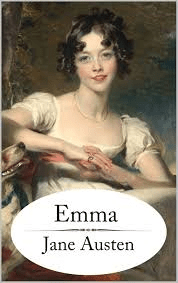
Ah, Emma. If Jane Austen’s novels were a group of friends at a party, Emma would be the self-assured, slightly meddlesome one who insists on matchmaking everyone in the room, only to realize halfway through that maybe she doesn’t know best after all. It’s a witty, charming, and surprisingly modern exploration of self-awareness, relationships, and the art of learning from your mistakes, all wrapped up in Austen’s sparkling prose.
At the centre of the story is Emma Woodhouse, a wealthy, clever, and undeniably flawed young woman who proudly declares she’ll never marry. Why bother, when she has everything she could possibly want? Instead, she spends her time meddling in the romantic lives of others, with increasingly chaotic results. Whether it’s trying to pair her sweet but impressionable friend Harriet with men who are all wrong for her, or overlooking her own feelings for Mr. Knightley (the book’s steady moral compass), Emma’s journey is a delightful mess of misguided good intentions.
What makes Emma so special is that Austen wasn’t afraid to give us a heroine who’s, well, kind of annoying at times. Emma is privileged, self-centred, and a bit of a snob. But she’s also deeply human, her heart is usually in the right place, and as she stumbles through her mistakes, you can’t help but root for her to grow up and get it right. By the end of the novel, she’s learned hard-earned lessons about humility, empathy, and love, making her one of Austen’s most well-rounded characters.
Austen’s trademark wit is on full display in Emma. The dialogue crackles with humour and subtle jabs, and the supporting cast is full of unforgettable characters. There’s the ever-charming Mr. Knightley, whose patient wisdom serves as a counterbalance to Emma’s impulsiveness. Harriet Smith, the naïve and endearing friend whose journey is almost as engaging as Emma’s. And, of course, the hilarious, talkative Miss Bates, who deserves her own award for Most Underrated Austen Character. Even characters you love to dislike, like the socially climbing Eltons, are rendered with such precision and irony that they’re a joy to read about.
The plot of Emma is less about dramatic events and more about the slow unravelling of Emma’s own misconceptions, about love, class, and herself. Austen uses Emma’s small, insulated world of Highbury as a microcosm to explore larger themes: the dangers of arrogance, the complexity of human relationships, and the subtle but powerful ways in which societal expectations shape our lives. The story’s seemingly quiet surface belies its depth, and every reread reveals new layers of insight.
That said, Emma is not without its challenges. The pace can feel slow for modern readers used to faster-moving plots, and the first few chapters, where Emma’s arrogance is at its peak, might make you want to shake her. But stick with it, Austen rewards patience with a deeply satisfying arc, and by the end, you’ll see how every detail, every seemingly trivial exchange, was part of a masterfully crafted narrative.
Why Read It?
Because Austen is at her sharpest and most playful in Emma. It’s a novel that manages to be both biting and tender, comedic and profound. Emma herself is a heroine who grows on you, precisely because she starts off so flawed, it’s a joy to watch her evolve, stumble, and ultimately redeem herself. And Mr. Knightley? The perfect mix of kind, principled, and just snarky enough to keep Emma in check.
Final Rating: 4.5/5
Why? Emma is a brilliant character study, a satire of social norms, and a warm exploration of personal growth. While the pacing might test your patience at times, the wit, wisdom, and heart of the story more than make up for it. Read it for the laughs, the romance, and the life lessons, because no matter how many times the world changes, Emma Woodhouse’s journey to self-discovery remains as relevant as ever.
 Oriana's Book Blog
Leave a comment