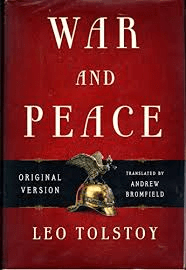
If someone ever tells you that War and Peace is “just a long book about Russian history,” politely smile, hand them a copy, and watch their mind explode. Because Leo Tolstoy’s sprawling epic is so much more than its reputation, it’s a literary buffet serving up philosophy, romance, war, politics, and a masterclass on human nature. Sure, it’s long (very long), but every page earns its place in one of the greatest novels ever written.
At its core, War and Peace is about, well, war and peace, both in the literal sense (Napoleon’s invasion of Russia) and in the metaphorical sense of inner conflict, love, and personal growth. Tolstoy weaves the lives of dozens of characters into this grand narrative, making it less of a story and more of a tapestry. You don’t just read this book; you live it alongside the characters.
Let’s start with the people. Pierre Bezukhov, the awkward, philosophical heir who’s constantly trying to figure out the meaning of life, is an absolute gem. Natasha Rostova, full of youthful exuberance and heartbreak, is so vivid she might as well leap off the page. And Andrei Bolkonsky, the brooding nobleman searching for purpose, feels like the template for every literary heartthrob ever. Tolstoy writes these characters with such depth and honesty that you’ll find pieces of yourself in all of them, even when they make terrible decisions (looking at you, Pierre).
What’s amazing about Tolstoy is how seamlessly he blends the personal with the historical. The backdrop of Napoleon’s invasion isn’t just a setting; it’s an integral part of the story. Tolstoy captures the chaos, heroism, and brutality of war in a way that’s hauntingly real. His battle scenes aren’t about glory, they’re about confusion, fear, and the messy, unpredictable nature of human conflict. And when he zooms out to reflect on history itself, he doesn’t just recount dates and battles. He questions the very nature of power, leadership, and destiny. It’s bold, it’s ambitious, and it’s the kind of thing that makes your brain hurt in the best way.
Now, let’s be honest, War and Peace isn’t a breezy beach read. Tolstoy isn’t afraid to pause the narrative for a philosophical deep dive, and some of these sections can feel dense. His digressions on history and free will might leave you scratching your head (or Googling summaries). But even when Tolstoy goes on a tangent, his insights are profound enough to make it worth the effort. This is a book that asks big questions about what drives history and what gives life meaning, and it challenges you to grapple with them too.
But don’t let the philosophical depth fool you, this book is also deeply human. Tolstoy’s ability to capture the small, intimate moments of life is unparalleled. A ballroom dance, a quiet snowfall, a fleeting glance between lovers, these scenes are rendered with such precision and beauty that they linger in your mind long after you’ve turned the page. The love stories in War and Peace are as compelling as the battles, if not more so. Natasha’s romance with Andrei, Pierre’s search for belonging, and the tangled web of relationships in the Rostov and Bolkonsky families all feel achingly real.
And the ending? Without spoiling anything, it’s one of the most satisfying conclusions in literature. Tolstoy doesn’t just tie up the plot; he leaves you with a sense of peace (pun intended) and a deeper understanding of life itself. It’s the kind of book that changes you, not in a dramatic, lightning-bolt way, but in a quiet, enduring way that stays with you long after you’ve closed the cover.
Why Read It?
Because it’s a masterpiece, plain and simple. Yes, it’s long. Yes, it requires patience. But it’s also one of the most rewarding reading experiences you’ll ever have. Tolstoy doesn’t just tell a story; he immerses you in an entire world. By the time you finish, you’ll feel like you’ve lived through the Napoleonic Wars yourself, and come out the other side wiser and more compassionate.
Final Rating: 5/5
Why? Because it’s War and Peace. It’s sweeping, profound, and surprisingly relatable for a book set in 19th-century Russia. The characters are unforgettable, the themes are timeless, and the writing is as brilliant as literature gets. It’s not just a book, it’s an experience, one that will make you laugh, cry, and maybe even rethink your place in the universe. Go ahead, take the plunge. It’s worth every page.
 Oriana's Book Blog
Leave a comment