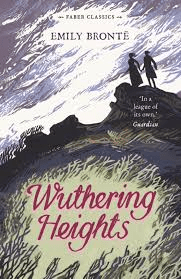
If Wuthering Heights were a person, it wouldn’t be your charming best friend or a steady confidant. It would be the moody, tempestuous figure standing on the moors during a thunderstorm, glaring into the distance and daring you to approach. Emily Brontë’s only novel is a wild, gothic masterpiece, a story of passion, vengeance, and obsession that feels as raw and untamed today as it must have when it was published in 1847.
The novel tells the story of two generations of families, mainly the Earnshaw’s and the Lintons, and the destructive love between the orphan Heathcliff and Catherine Earnshaw. Their love isn’t romantic in the traditional sense; it’s obsessive, fiery, and often cruel. From their childhood bond on the windswept moors to their adult betrayals and separations, Heathcliff and Catherine’s relationship is the beating heart of the novel, and it’s a dark, bloody heart at that.
Brontë structures the story like a puzzle box, with multiple narrators and a timeline that loops and twists back on itself. Mr. Lockwood, a tenant at Thrushcross Grange, acts as the bewildered outsider, while the housekeeper, Nelly Dean, recounts the turbulent history of Wuthering Heights and its inhabitants. This layered storytelling adds an eerie, almost mythic quality to the tale, as if the events were both hyperreal and distorted by time and memory.
What sets Wuthering Heights apart from other 19th-century novels is its complete refusal to conform to expectations. This isn’t a cozy romance where love triumphs over all, it’s a feral exploration of how love can destroy just as easily as it can uplift. Heathcliff, often hailed as one of literature’s great antiheroes, is a deeply flawed character: vengeful, cruel, and unrelenting. Yet he’s also magnetic, his raw emotions and tragic backstory making him impossible to ignore. Catherine, too, is no angel; her selfishness and pride fuel much of the story’s chaos. Together, they’re less a couple to root for and more a force of nature, wreaking havoc on everyone around them.
The setting of the novel is almost a character in itself. The bleak, windswept Yorkshire moors mirror the emotional turbulence of the story. Brontë’s descriptions of the landscape are hauntingly beautiful, creating an atmosphere that’s equal parts romantic and menacing. You can almost feel the cold wind on your face and hear the howling of the storm as you read.
The themes of Wuthering Heights, love, revenge, class, and the cyclical nature of abuse, are timeless, but Brontë’s treatment of them is anything but conventional. She digs deep into the ugliness of her characters’ actions, refusing to sugarcoat their flaws or justify their behaviour. This unflinching portrayal of human darkness is what makes the novel so compelling, and, for some readers, so polarizing.
That brings us to the criticism. Wuthering Heights can be a tough read, not just because of its dense prose and complex structure, but because of its deeply flawed characters. If you’re someone who needs likable protagonists, this might not be the book for you. But that’s part of Brontë’s genius: she doesn’t ask you to like her characters; she asks you to understand them.
Why Read It?
Because it’s a masterpiece of gothic literature, a novel that captures the primal forces of love and revenge with a ferocity few stories can match. It’s a tale of passion that refuses to be neat or pretty, challenging you to grapple with its messy, unrelenting intensity.
Final Rating: 3.5/5
Why? Wuthering Heights is as haunting and unforgettable as the moors it’s set on. Emily Brontë’s prose is lush, her characters are vividly alive (even when they’re morally repugnant), and her story is as unpredictable as it is emotionally gripping. It’s not a comforting read, but it’s a profoundly moving one. For anyone who loves dark, gothic tales or wants to experience one of literature’s most iconic depictions of love and vengeance, this is an absolute must-read.
 Oriana's Book Blog
Leave a comment