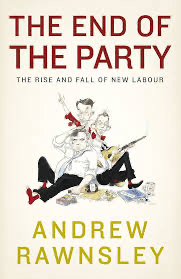
Andrew Rawnsley’s The End of the Party promises to be the definitive account of New Labour’s reign—spanning its dizzying rise, its time at the height of power, and its eventual unravelling under the weight of infighting, scandals, and the crushing Iraq War legacy. While the book is undeniably ambitious and packed with meticulous research, it doesn’t quite stick the landing. For all its insight and scope, the dense, overly long narrative often feels like wading through treacle.
At its heart, the book explores the political marriage and subsequent messy divorce between Tony Blair and Gordon Brown. This dynamic is undeniably fascinating: Blair, the telegenic master of winning hearts and minds, versus Brown, the brooding strategist whose intellect was matched only by his inability to charm the public. Their rivalry, which bordered on outright sabotage at times, is Rawnsley’s main thread, and to his credit, he paints their tension in vivid, often theatrical detail. But as the book hammers on and on about their personal animosities, it starts to feel repetitive—like Rawnsley is beating a drum that’s already long since cracked.
Rawnsley’s writing swings between gripping and tiresome. On the one hand, he has a knack for turning high-stakes political manoeuvring into something almost novelistic. The key moments of New Labour’s history—the landslide 1997 election, Blair’s Iraq War gamble, the financial crash—are rendered with dramatic flair, and you get a sense of the behind-the-scenes chaos and calculation. But on the other hand, the book’s relentless dive into insider gossip, minor policy details, and bureaucratic squabbles becomes exhausting. At nearly 800 pages, The End of the Party is as bloated as the worst of government inefficiency.
To make matters worse, the book sometimes feels unbalanced. The obsessive focus on Blair and Brown overshadows other key players in the New Labour story. Figures like Alastair Campbell, Peter Mandelson, and even John Prescott pop up, but they’re often relegated to the sidelines. New Labour was a movement, not just two men at odds, and the book could have done more to show the breadth of its impact and contributors.
Then there’s the tone. Rawnsley clearly admires New Labour’s early achievements—its modernisation of the Labour Party, peace in Northern Ireland, its significant investment in public services—but the book is overwhelmingly dominated by the failings. While fair criticisms of the Iraq War, internal power struggles, and the financial crash are warranted, the narrative often feels bogged down in cynicism. It’s not that Rawnsley is wrong in his critique; it’s that he rarely offers a counterbalance, which can make the whole enterprise feel bleak and joyless.
Finally, the book’s sheer density may put off even the most devoted political junkies. Rawnsley’s research is impressive—his insider access unparalleled—but the endless minutiae of policy debates, leadership squabbles, and spin-doctoring can feel like overkill. For a casual reader looking to understand New Labour’s story, this book often feels inaccessible.
Why Read It?
Because if you have the patience for detail-heavy political analysis, Rawnsley does provide a front-row seat to the power plays, personalities, and pressures that defined New Labour. It’s particularly strong on the Blair-Brown dynamic and gives you a real sense of the messy business of governing. But be prepared for a marathon read that requires stamina and a taste for political nitty-gritty.
Final Rating: 2.5/5
Why? While The End of the Party has its moments of insight and drama, it’s let down by its excessive length, narrow focus on Blair and Brown, and an unrelenting tone of pessimism. For a book about a political movement that once inspired hope and change, it’s ironic that reading it often feels like a chore. If you’re a die-hard political enthusiast, you might find value here, but for most readers, it’s a slog that doesn’t justify its word count. A tighter, more balanced narrative would have made this a far more compelling read.
 Oriana's Book Blog
Leave a comment