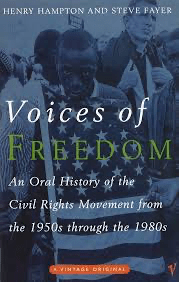
“Voices of Freedom” is a stirring and deeply personal window into one of the most pivotal movements in American history. Compiled by Henry Hampton and Steve Fayer, this oral history serves as a companion to the acclaimed PBS series Eyes on the Prize, weaving together firsthand accounts from activists, leaders, and everyday people who lived through the struggle for civil rights. It’s an ambitious and illuminating book, but its fragmented format and sprawling scope can, at times, diminish its impact.
The greatest strength of “Voices of Freedom” is its authenticity. Rather than filtering the Civil Rights Movement through a singular perspective, Hampton and Fayer hand the microphone to those who were actually there. From figures like Rosa Parks and John Lewis to lesser-known activists and participants, the book captures a diversity of experiences, emotions, and strategies. The result is a powerful mosaic of voices that reveal the complexities of the movement—its triumphs, its struggles, and its contradictions.
The book spans a broad timeline, beginning with the Montgomery Bus Boycott in the 1950s and extending through the Black Power movement and beyond. Each chapter is built around key moments, including the Freedom Rides, the Selma marches, and the rise of Malcolm X. By using oral histories, the authors allow the raw, unvarnished voices of the people to carry the story, which makes the book feel visceral and immediate. You’re not just reading about the movement; you’re hearing it directly from those who made it happen.
However, the very thing that gives the book its power—the oral history format—also creates some challenges. The narrative is intentionally fragmented, jumping from one voice to another without much connective tissue. While this approach captures the breadth of perspectives, it can also feel disjointed, making it hard to follow a cohesive storyline. For readers unfamiliar with the broader history of the Civil Rights Movement, this lack of context might feel overwhelming or confusing.
Another limitation of the book is its scope. By attempting to cover three decades of activism in a single volume, some events and voices feel rushed or underexplored. For example, the 1980s section feels tacked on, with less depth than the earlier chapters. While the book provides a comprehensive overview, it doesn’t always delve deeply enough into the nuances of specific moments or individuals.
That said, “Voices of Freedom” succeeds in showing the multifaceted nature of the Civil Rights Movement. It doesn’t shy away from the internal divisions and debates that shaped the struggle, such as the tension between nonviolence and militancy or the differences in approach between Martin Luther King Jr. and Malcolm X. These complexities add richness to the narrative and remind readers that the movement wasn’t a monolith but a dynamic, evolving coalition of ideas and people.
Hampton and Fayer’s decision to focus on the voices of everyday participants, not just famous leaders, is a particularly commendable choice. The testimonies of students, clergy, and ordinary citizens bring an emotional resonance to the book that might otherwise be lost in a traditional history. Their courage, sacrifices, and determination are both inspiring and humbling, even when the format sometimes dilutes the weight of their stories.
Why Read It?
Because it’s a raw, unfiltered, and deeply human look at the Civil Rights Movement, told by the people who lived it. The book’s oral history format gives it an immediacy and emotional power that traditional histories often lack, making it a valuable resource for understanding the personal toll and collective triumphs of this pivotal era.
Final Rating: 3.5/5
Why? While “Voices of Freedom” is an important and moving record of the Civil Rights Movement, its fragmented structure and sprawling timeline make it a challenging read. The lack of a cohesive narrative and limited depth in some areas hold it back from being truly great. That said, it’s a crucial book for anyone interested in hearing the firsthand accounts of those who risked everything to fight for justice, equality, and freedom. It may not be perfect, but its voices deserve to be heard.
 Oriana's Book Blog
Leave a comment